An Important Discussion About Recent Migration Policy Changes and the Iranian-Australian Community
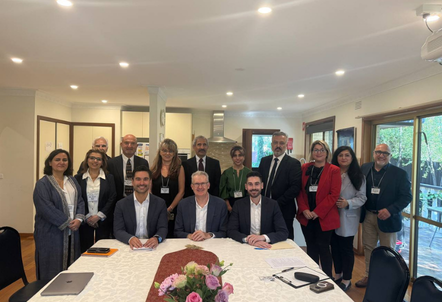
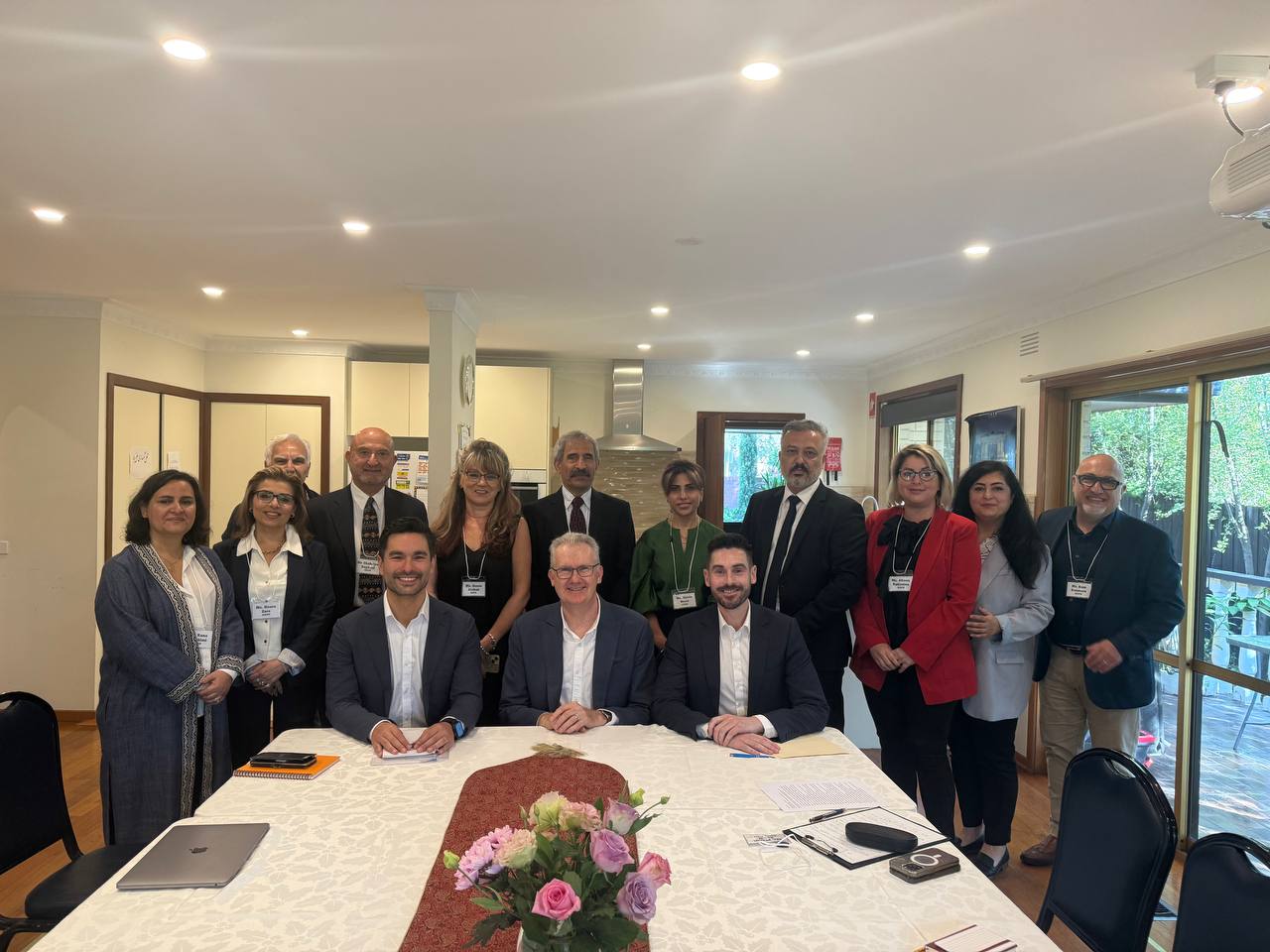
On Sunday, 22 March 2026, an important meeting was held at the House of Persia. The Hon Tony Burke MP, Minister for Home Affairs and Immigration, attended with Members of Parliament Gabriel Ng and Matt Gregg.
Representatives from the House of Persia management team, AISOV’s management team, a migration lawyer and members of the Iranian-Australian community also took part.
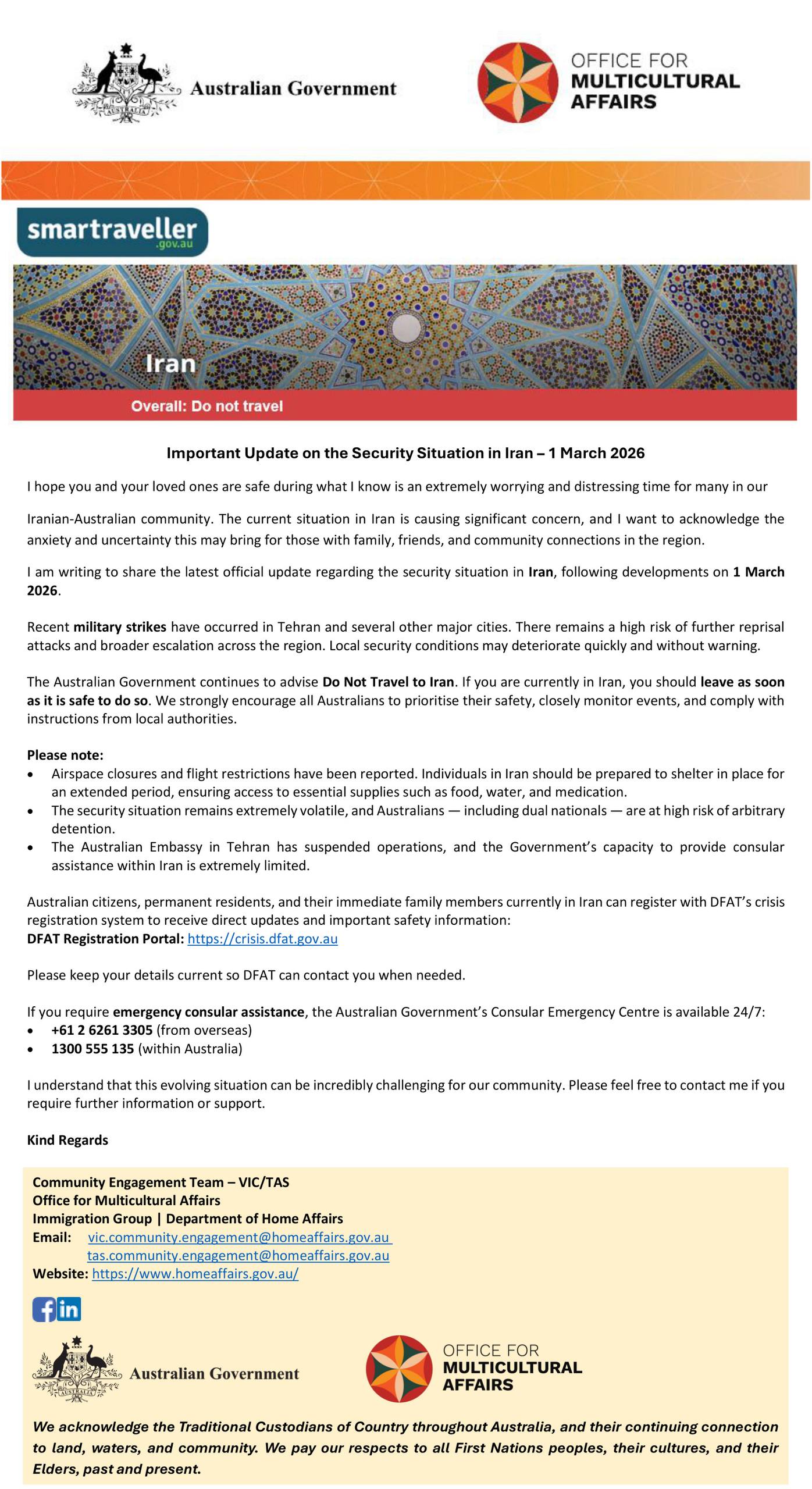
The main purpose of the meeting was to discuss recent migration policy changes and their effect on Iranians, particularly in light of the current situation in Iran and the Migration Amendment Act 2026.
Key points raised at the meeting included:
- Australian Government migration decisions are based on the information and data available, although access to accurate information from inside Iran is limited.
- The new measures may significantly affect temporary visas, including Visitor visas (subclass 600) and Student visas (subclass 500).
- In future visa assessments, demonstrating a genuine intention to stay temporarily will remain a central consideration.
- About 7,000 Iranian Visitor visa holders are currently outside Australia, and a six-month entry restriction may be imposed in the coming days. Consideration of exceptional circumstances was also discussed.
- The Minister acknowledged that AISOV is advocating through correspondence with Members of Parliament for these restrictions to be lifted, particularly for parents, and undertook to consider the issue more closely.
- In response to another question, it was stated that there is presently no plan to increase students’ permitted working hours or introduce special measures similar to those used in some other international crises.
Community representatives also raised concerns about:
- financial difficulties faced by students because money transfers from Iran are restricted;
- limited post-study pathways to permanent residence, especially for people aged over 35;
- the lack of consultation with the community before the changes were introduced; and
- the need for greater government support to maintain cohesion and solidarity within the Iranian community in Australia.
While some of these matters were acknowledged, several questions remain unanswered. Further clarification and more effective engagement with the community are expected.
Active community participation, responsible advocacy, and attention to both the legal and human effects of decision-making are more important than ever.